Face Serum vs Face Cream: Which One Should You Use?
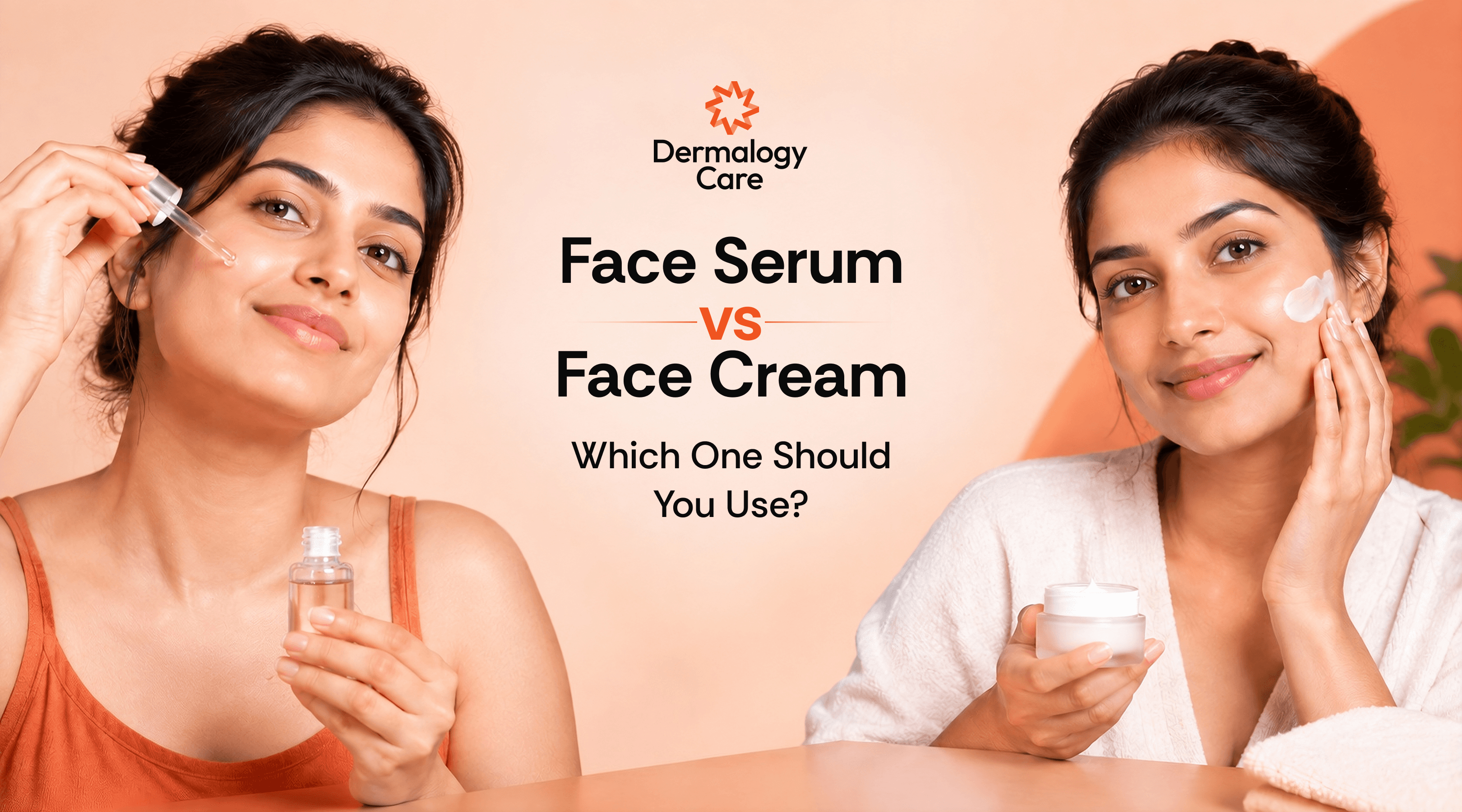
Walk into any skincare store and you will find shelves full of serums, creams, moisturisers and treatments. Then comes the obvious question: Do I really need both a serum and a cream?
The confusion is understandable because both products are applied to the face, and some of them even contain similar ingredients. But they are not designed to do exactly the same job.
A face serum is usually a lightweight, concentrated product designed to target specific skin concerns. A face cream, on the other hand, is generally formulated to moisturise the skin, support the skin barrier and reduce moisture loss.
So, when it comes to face serum vs face cream, the answer is not necessarily one or the other. In many skincare routines, they can actually complement each other.
The important part is understanding what your skin needs and choosing products accordingly.
What Is a Face Serum?
A face serum is a skincare product designed to deliver specific active ingredients to the skin. Serums usually have a lightweight texture and are available in different formulations depending on the concern being addressed.
You can find serums containing ingredients such as:
Vitamin C
Niacinamide
Hyaluronic acid
Salicylic acid
Azelaic acid
Retinoids
Peptides
The purpose of a serum depends on its ingredients. One may focus on pigmentation, another on hydration, while another may be designed for acne or signs of ageing.
Because serums are often formulated around particular active ingredients, they are generally considered a treatment-focused step in a skincare routine.
What Is a Face Cream?
A face cream is primarily used to moisturise and support the skin barrier.
Creams can contain ingredients such as ceramides, glycerin, hyaluronic acid, squalane and other emollients or occlusive ingredients that help maintain hydration.
A good face cream can help reduce water loss from the skin and make it feel softer and more comfortable.
The texture can vary significantly. Some products are lightweight lotions or gel-creams, while others are richer and better suited to dry skin.
A face cream does not necessarily mean an anti-ageing or heavy moisturiser. The right formulation can be used by almost any skin type.
Face Serum vs Face Cream: What Is the Difference?
The main difference between face serum and face cream comes down to their purpose, formulation and texture.
Feature | Face Serum | Face Cream |
Main purpose | Targets specific skin concerns | Hydrates and supports the skin barrier |
Texture | Usually lightweight | Usually richer, although gel-creams are also available |
Key ingredients | Often contains concentrated actives | Often contains moisturising and barrier-supporting ingredients |
Common concerns | Pigmentation, acne, dullness, dehydration, ageing | Dryness, dehydration and barrier support |
Position in routine | Usually applied before moisturiser | Usually applied after serum |
Face Serum vs Face Cream: Which Is Better?
There is no universal winner.
If you are asking face serum vs face cream which is better, the answer depends on what you want your skincare routine to achieve.
If your main concern is pigmentation, acne, dullness or fine lines, a serum containing an appropriate active ingredient may be useful.
If your skin feels dry, tight or irritated, a moisturising cream may be more important.
And if you have both concerns, there is no reason you cannot use both.
Think of it this way:
Serum = targeted treatment
Cream = hydration and barrier support
They serve different purposes, which is why comparing them as direct substitutes can sometimes be misleading.
What Are the Benefits of Using a Face Serum?
The facial serum benefits depend largely on the ingredients in the product.
Hydration
Serums containing humectants such as hyaluronic acid can help attract water to the skin. They can be useful when the skin feels dehydrated but you do not want a heavy product.
Pigmentation Support
Vitamin C, niacinamide, azelaic acid and other ingredients may help improve the appearance of uneven skin tone or pigmentation when used appropriately.
Acne and Excess Oil
Serums containing ingredients such as niacinamide or salicylic acid may be useful for oily and acne-prone skin.
Signs of Ageing
Certain serums contain antioxidants, peptides or retinoids that can support concerns such as fine lines, uneven texture and loss of firmness.
The important point is that there is no single "best serum." The right product depends on the concern you are trying to address.
Why Is Face Cream Important?
A serum can target a concern, but your skin still needs hydration and barrier support.
The outermost layer of the skin helps prevent excessive water loss and protects against environmental irritants. When the barrier is compromised, the skin may become dry, flaky, sensitive or uncomfortable.
A face cream can help support this barrier.
This is especially important if your routine includes active ingredients such as retinoids, exfoliating acids or acne treatments, which can sometimes cause dryness or irritation.
So, even if you have oily skin, do not automatically assume you should skip moisturiser. A lightweight, non-comedogenic formulation may be a better choice.
Should I Use Serum or Face Cream?
If you are wondering should I use serum or face cream, start by asking what your skin actually needs.
Choose a serum if:
You want to target pigmentation
You are dealing with dullness
You want additional hydration
You have specific acne concerns
You want to address signs of ageing
You want to add a particular active ingredient to your routine
Choose a face cream if:
Your skin feels dry or tight
Your skin barrier feels irritated
You need everyday moisturisation
Your routine already contains several active ingredients
You prefer a simpler skincare routine
If you are unsure, a moisturiser is usually the more basic foundation. A serum can then be added according to your specific skin concern.
Can You Use Serum and Cream Together?
Yes. In fact, serum and cream together is a common way to structure a skincare routine.
The usual order is:
Cleanser → Serum → Face cream → Sunscreen
In the morning, sunscreen should be the final skincare step.
At night, the routine can be:
Cleanser → Serum → Face cream
The serum goes before the cream because it is generally lighter in texture. The cream then provides hydration and helps reduce moisture loss.
However, the exact order can vary depending on the products. Some treatment products have specific instructions, so follow the manufacturer's directions.
When to Use Face Serum and Face Cream?
Knowing when to use face serum and face cream is fairly simple.
A serum can generally be used once or twice daily depending on its ingredients and your skin's tolerance.
For example, an antioxidant serum may fit into a morning routine, while a retinoid serum is generally used at night.
A basic moisturising cream can usually be used morning and night.
If your serum contains a strong active ingredient, do not assume it should automatically be used twice a day. Ingredients such as retinoids and exfoliating acids may need a slower introduction.
Can You Use Different Serums at the Same Time?
Technically, several serums can be layered, but that does not mean you should.
This is another common skincare mistake.
Using vitamin C, salicylic acid, glycolic acid, retinoids and several other active ingredients together can increase the risk of irritation.
A simpler approach is often more effective.
For example, you might use an antioxidant serum in the morning and a different treatment at night. Some ingredients can also be alternated on different days.
If you are new to active skincare, introduce one product at a time.
How to Choose the Right Face Serum
Start with the concern, not the trend.
If your main concern is pigmentation, look for ingredients that have evidence for improving uneven pigmentation.
If your skin is oily and acne-prone, ingredients such as niacinamide or salicylic acid may be useful depending on your specific concern.
For dehydration, humectants such as hyaluronic acid can be considered.
For signs of ageing, ingredients such as retinoids have stronger evidence than many trendy alternatives.
Also consider the concentration and formulation. A higher percentage does not automatically mean better results. Your skin needs to tolerate the product consistently.
How to Choose the Right Face Cream
Your skin type and climate can help determine the texture you prefer.
Oily skin: Look for lightweight, non-comedogenic lotions or gel-creams.
Combination skin: A light moisturiser may work well, with additional hydration on drier areas if needed.
Dry skin: A richer cream containing ceramides, glycerin or emollients may be more comfortable.
Sensitive skin: Keep the formulation simple and avoid unnecessary fragrance or potentially irritating ingredients if your skin reacts easily.
The goal is not to find the most expensive cream. It is to find one that keeps your skin comfortable and supports the barrier.
What If You Are Confused About Which Products to Use?
This is where skincare can become overwhelming.
You may know that you need a serum, but then you have to decide which ingredient, concentration and formulation are appropriate. Add a moisturiser, sunscreen and perhaps an acne treatment, and it is easy to end up with more products than your skin actually needs.
A doctor-led approach can make product selection simpler.
Dermalogycare offers online dermatology consultations for ₹99. If you are confused about which skincare products are right for your skin, you can consult a doctor online and discuss your specific concerns.
Based on the consultation, the doctor can recommend a customised skincare kit suited to your skin and concerns.
This can be especially useful if you are dealing with multiple concerns such as acne, pigmentation, dryness or sensitivity and do not know which products should be used together.
Instead of following a complicated routine based on social media recommendations, professional guidance can help you build a routine around what your skin actually needs.
A Simple Skincare Routine Using Both
If both products are appropriate for you, your routine does not need to be complicated.
Morning
1. Cleanser
Remove overnight oil and impurities.
2. Face serum
Use a suitable treatment or antioxidant serum.
3. Face cream
Apply moisturiser according to your skin type.
4. Sunscreen
Finish with broad-spectrum SPF 30 or higher.
Night
1. Cleanser
2. Face serum
Use your selected treatment serum.
3. Face cream
Apply moisturiser to support hydration and the skin barrier.
You can adjust this routine based on your skin type and the active ingredients you use.
Final Takeaway
The debate around face serum vs face cream often makes skincare seem more complicated than it needs to be.
A serum is generally designed to target a particular skin concern, while a face cream primarily provides hydration and barrier support. Neither is automatically better than the other.
For many people, using both can make sense. Apply the serum first and follow it with a moisturiser. During the day, always finish with sunscreen.
The most important thing is choosing products according to your skin's needs rather than buying products simply because they are popular.
If you are unsure about which serum, cream or other skincare products you should use, Dermalogycare can help take some of the guesswork out of your routine. You can book an online doctor consultation for ₹99 and receive professional guidance along with a customised skincare kit based on your individual skin concerns.
A good skincare routine does not have to contain ten products. It just needs to contain the right ones.