
Skincare Routine for Oily and Acne-Prone Skin
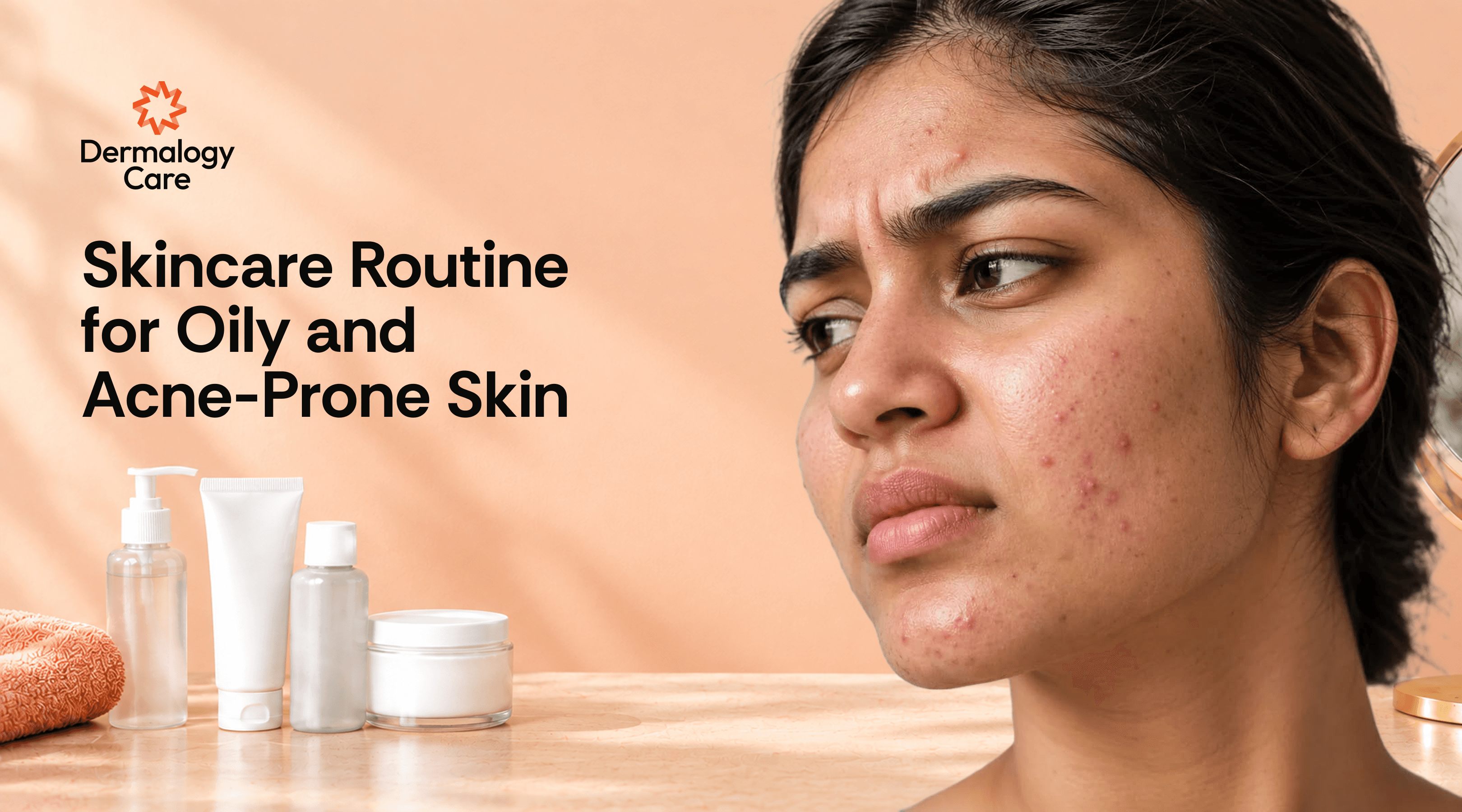
Oily skin can be tricky to manage. You wash your face in the morning and, a few hours later, your forehead and nose are shiny again. Then comes the next problem. You start noticing clogged pores, blackheads, whiteheads or the occasional painful pimple.
It can be tempting to fight all that oil by washing your face repeatedly or using strong products that leave your skin feeling extremely dry. But that approach can sometimes make things worse.
Oily and acne-prone skin needs balance. The goal is not to remove every trace of oil from the skin. It is to control excess sebum, keep pores clear, protect the skin barrier and treat acne without causing unnecessary irritation.
A consistent routine can make a significant difference. You just need the right steps and ingredients.
Why Does Oily Skin Develop Acne?
Sebum, or natural skin oil, is not bad for your skin. It helps keep the skin moisturised and protects it from environmental stress.
The problem starts when the sebaceous glands produce excess sebum. Dead skin cells can mix with this oil and accumulate inside hair follicles. This can contribute to clogged pores.
Acne also involves inflammation and changes in the skin's follicular environment. Certain bacteria associated with acne can contribute to the inflammatory process.
Hormonal fluctuations can increase oil production too. This is one reason acne is common during adolescence and can continue into adulthood.
Your skincare routine cannot control every factor involved in acne. But it can help manage oil, reduce pore blockage and support healthier skin.
What Should an Oily Skin Care Routine Include?
A good oily skin care routine does not need ten different products.
The basic structure is simple:
Morning: Cleanser → treatment or serum → moisturiser → sunscreen
Night: Cleanser → acne treatment → moisturiser
The exact products can vary depending on whether you mainly struggle with occasional breakouts, blackheads, inflammatory acne or persistent acne.
The most important thing is consistency. Changing products every few days makes it difficult to know what is actually helping your skin.
Step 1: Use a Gentle Cleanser
Cleansing removes excess oil, sweat, sunscreen and impurities from the skin.
If your face feels tight and uncomfortable immediately after washing, your cleanser may be too harsh.
A gentle foaming or gel cleanser can work well for many people with oily skin. If you are prone to clogged pores, a cleanser containing salicylic acid may also be useful.
Salicylic acid is a beta hydroxy acid that can penetrate into the follicle and help loosen oil and dead skin cell buildup.
You do not necessarily need a medicated cleanser twice a day. If your skin becomes dry or irritated, use a gentle cleanser for one of your cleansing steps.
Step 2: Choose an Acne-Focused Ingredient
This is where your routine becomes more targeted.
Different acne ingredients work in different ways, so choosing one should depend on the type and severity of your breakouts.
Salicylic Acid
Salicylic acid helps exfoliate inside the pores and can be particularly useful for blackheads, whiteheads and oily skin.
It is often found in cleansers, toners and leave-on treatments.
Start gradually if you are new to it. Using too much too quickly can cause dryness and irritation.
Niacinamide
Niacinamide is a form of vitamin B3 that can support the skin barrier and help regulate excess oil.
It is often included in products designed for oily or acne-prone skin. It can also be useful when acne is accompanied by redness or post-acne marks.
Niacinamide is generally well tolerated, making it a practical ingredient for people who want a relatively simple routine.
Benzoyl Peroxide
Benzoyl peroxide is a well-established acne treatment. It helps reduce acne-causing bacteria and has anti-inflammatory effects.
It can be particularly useful for inflammatory pimples.
One thing to remember: benzoyl peroxide can cause dryness and irritation. It can also bleach fabrics, so be careful with towels, pillowcases and clothing.
Adapalene
Adapalene is a topical retinoid used to treat acne. It helps normalise the shedding of skin cells inside hair follicles and can prevent new acne lesions from developing.
It is commonly used at night and should be introduced gradually.
If your acne is persistent or moderate to severe, it is better to discuss retinoid use with a dermatologist rather than building a strong routine on your own.
Step 3: Do Not Skip Moisturiser
This may sound strange if your face is already oily.
But oily skin still needs hydration.
Using harsh products to completely strip away oil can damage the skin barrier. Once the barrier becomes irritated, you may experience dryness, sensitivity and more discomfort.
Look for a lightweight, non-comedogenic moisturiser. Gel or lotion textures may feel more comfortable if you dislike heavy creams.
Ingredients such as glycerin, ceramides and hyaluronic acid can help maintain hydration without necessarily making the skin feel greasy.
A moisturiser also helps your skin tolerate acne treatments that may cause dryness.
Step 4: Sunscreen Is Non-Negotiable
If you have acne, sunscreen is still essential.
Inflammation from acne can leave behind dark marks known as post-inflammatory hyperpigmentation. Sun exposure can make these marks more noticeable and prolong their appearance.
Choose a broad-spectrum sunscreen with SPF 30 or higher.
People with oily skin often prefer lightweight, gel-based or fluid formulations. The best sunscreen is one you can apply generously and consistently without feeling uncomfortable.
Look for products labelled non-comedogenic if you are concerned about clogged pores.
The Best Skincare Routine for Oily and Acne-Prone Skin
A practical acne-prone skin routine can be kept quite simple.
Morning
Start with a gentle cleanser. If your skin tolerates salicylic acid well, you can use a salicylic acid cleanser.
Follow it with a lightweight treatment such as niacinamide, if needed.
Apply moisturiser next. Do not skip this step simply because your skin is oily.
Finish with broad-spectrum sunscreen.
That is enough for a basic morning routine.
Night
Cleanse your face to remove sunscreen, makeup, oil and dirt.
Apply your chosen acne treatment. Depending on your concern, this may include salicylic acid, benzoyl peroxide or a retinoid.
Finish with moisturiser.
You do not need to layer multiple acne treatments every night. In fact, doing so may cause irritation and make your routine harder to maintain.
How Often Should You Exfoliate Oily Skin?
Exfoliation can help remove excess dead skin cells, but more is not better.
If you already use salicylic acid, a retinoid or another acne treatment, adding a separate exfoliating toner or scrub may be unnecessary.
Physical scrubs can be particularly irritating when you have active acne. Rubbing inflamed skin aggressively does not make pimples disappear faster.
If you want to add an exfoliating product, introduce it slowly and pay attention to how your skin responds.
Persistent burning, peeling or redness is a sign to step back.
What Products Are Best for Oily Acne-Prone Skin?
The best products for oily acne-prone skin are not necessarily the products with the highest number of active ingredients.
Look for formulations that address your actual concerns.
A useful routine may include:
A gentle gel or foaming cleanser
Salicylic acid for clogged pores
Niacinamide for oil control and barrier support
Benzoyl peroxide for inflammatory acne
Adapalene or another retinoid when appropriate
A lightweight, non-comedogenic moisturiser
Broad-spectrum sunscreen
You do not need all of these.
For example, someone with occasional blackheads may need a very different routine from someone with painful inflammatory acne.
Common Mistakes People Make With Oily Skin
One of the biggest mistakes is washing the face too frequently.
It is understandable. You see oil and want to remove it. But repeatedly cleansing or scrubbing can irritate the skin.
Another mistake is skipping moisturiser. Oily skin can still become dehydrated.
Then there is using too many active ingredients. Salicylic acid, benzoyl peroxide, retinoids, exfoliating acids and strong masks may all have a place in skincare, but using everything together is rarely a good idea.
And do not forget about picking pimples. Squeezing or scratching acne can increase inflammation and raise the risk of persistent marks and scarring.
What About Acne Marks?
Getting rid of active acne is only part of the process. Many people are left with brown or red marks after a breakout has healed.
The first step is preventing new acne.
Ingredients such as niacinamide, azelaic acid and retinoids may help improve the appearance of post-acne pigmentation over time. Sunscreen is particularly important because UV exposure can darken these marks.
If you have deep acne scars rather than flat dark marks, skincare products may have limited results. Procedures such as microneedling, chemical peels or laser treatments may be considered depending on the type of scarring.
When Should You See a Dermatologist?
Not every pimple needs medical treatment.
But you should consider seeing a dermatologist if your acne is:
Painful or deep
Leaving scars
Becoming increasingly frequent
Not improving after consistent over-the-counter care
Affecting your confidence or daily life
Associated with significant pigmentation
Persistent acne can sometimes be linked to hormonal factors or other underlying issues. A dermatologist can identify the type of acne and create a treatment plan accordingly.
It is also worth getting professional advice if your skin becomes increasingly irritated after using several acne products.
A Doctor-Led Routine Can Take the Guesswork Out
Skincare aisles can be overwhelming. You may find ten products claiming to control oil, five promising clearer pores and several more designed for acne marks.
So, which one should you actually use?
That depends on your skin.
Dermalogycare offers an online dermatologist consultation for ₹99 for people who are unsure about which skincare products are suitable for them. After understanding your skin concerns, the doctor can recommend a customised skincare kit based on your individual needs.
This can be particularly useful when you have more than one concern, such as oily skin with acne, sensitivity and post-acne pigmentation.
Instead of buying multiple products and hoping they work, a doctor-led routine gives you a more structured approach to your skincare.
Final Thoughts
Managing oily and acne-prone skin is not about trying to eliminate every bit of oil. Your skin needs some natural oil to stay healthy.
The focus should be on controlling excess sebum, keeping pores clear, reducing inflammation and maintaining a strong skin barrier.
A simple routine can go a long way. Cleanse gently, use appropriate acne-fighting ingredients, moisturise and never skip sunscreen.
Most importantly, give your routine time. Acne rarely improves overnight, and constantly changing products can make things more complicated.
If you are confused about what your skin actually needs, you can consider a dermatologist-led approach through Dermalogycare. An online consultation is available for ₹99, and the doctor can recommend a customised skincare kit based on your concerns.
Good skincare is not about having the biggest shelf. It is about using the right products consistently.