
Why Skin Gets Dehydrated Even During Monsoon
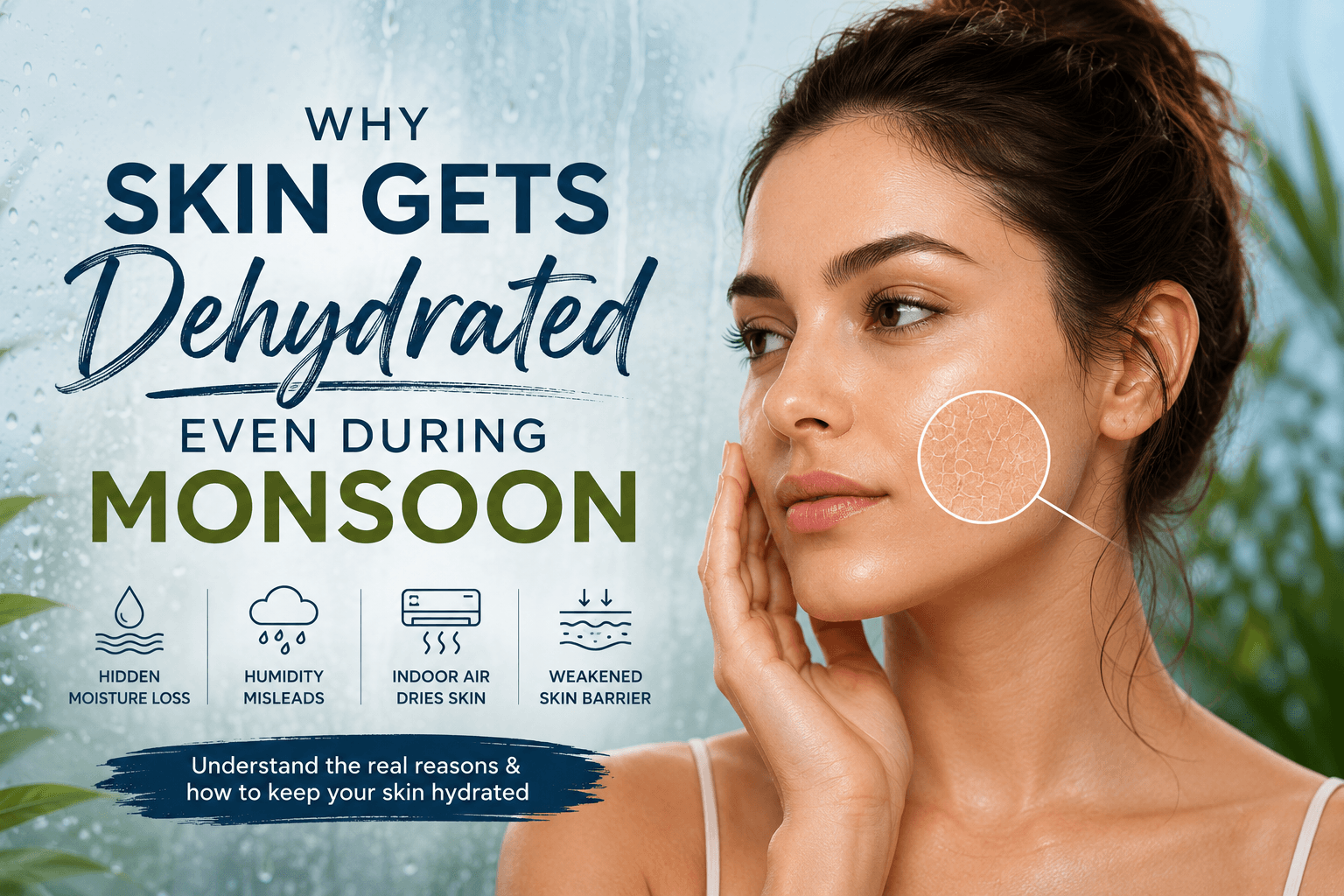
When the monsoon arrives, most people assume their skin no longer needs extra hydration. After all, the weather feels cooler, the humidity levels are high, and sweating becomes more common. Surprisingly, this is exactly the season when many people start noticing dullness, tightness, rough patches, irritation, and an overall lack of glow. The reason? Your skin can still be dehydrated even when the air is full of moisture.
Dehydrated skin is often confused with dry skin, but the two are very different. Dry skin is a skin type that naturally produces less oil, whereas dehydrated skin is a temporary condition caused by a lack of water in the skin. Even oily and combination skin can become dehydrated during the rainy season.
Understanding why this happens can help you take better care of your skin and prevent common monsoon concerns before they become bigger problems.
Dehydrated Skin vs Dry Skin
Before discussing the causes, it is important to understand the difference.
Dry skin lacks natural oils or sebum. It often feels rough, flaky, and may require richer moisturizers.
Dehydrated skin lacks water. It can feel tight after cleansing, appear dull, show fine lines more prominently, and sometimes even become excessively oily as the skin tries to compensate for the water loss.
Many people with oily skin skip moisturizers during monsoon because they think their skin is already hydrated. This mistake often leads to even more dehydration and breakouts.
Why Does Skin Become Dehydrated During Monsoon?
1. High Humidity Doesn't Mean Hydrated Skin
Humidity may increase the amount of moisture in the air, but it doesn't automatically keep your skin hydrated.
Your skin barrier determines how well it retains water. If this protective barrier is weakened due to harsh cleansers, pollution, over-exfoliation, or unsuitable skincare products, water escapes from the skin much faster. As a result, your skin still becomes dehydrated despite the humid weather.
2. Excessive Sweating Causes Water Loss
Monsoon weather often feels sticky because of increased sweating. While sweating helps regulate body temperature, it also causes water and electrolytes to leave the body.
If you don't replenish this loss by drinking enough water, your skin may start showing signs of dehydration, including dullness, tightness, and reduced elasticity.
3. Air Conditioning Dries Out the Skin
Most offices, malls, cars, and homes rely on air conditioning during humid weather.
Although the weather outside is moist, indoor air conditioning removes moisture from the surrounding environment. Spending several hours in air-conditioned spaces can gradually pull moisture away from your skin, making it feel dry and uncomfortable.
4. Using Harsh Face Cleansers
Many people wash their face multiple times during monsoon because the skin feels oily.
Unfortunately, using strong face washes repeatedly strips away essential lipids that protect the skin barrier. Once the barrier becomes compromised, the skin loses water more quickly and becomes dehydrated.
A gentle cleanser used twice daily is usually enough for most skin types.
5. Skipping Moisturizer
One of the biggest skincare myths is that moisturizers are only needed during winter.
Even oily skin requires hydration throughout the year. Lightweight gel-based or water-based moisturizers help lock water into the skin without making it greasy. Skipping moisturizer actually signals the skin to produce more oil, leading to a combination of dehydration and excess sebum.
6. Rainwater, Pollution, and Dirt
Rain doesn't necessarily mean cleaner air.
Monsoon showers often mix with dust, pollutants, and environmental impurities. These particles settle on the skin and may weaken the skin barrier, increasing irritation and moisture loss.
Proper cleansing at the end of the day becomes especially important during this season.
7. Not Drinking Enough Water
People generally feel less thirsty during monsoon compared to summer.
As a result, water intake often decreases even though the body continues losing fluids through sweating. Reduced hydration reflects on the skin, making it appear tired and less radiant.
Maintaining adequate hydration from within remains just as important during the rainy season.
Signs Your Skin Is Dehydrated
Many people mistake dehydrated skin for oily or acne-prone skin. Watch for these common signs:
Tightness after washing your face
Dull or tired-looking complexion
Fine lines appearing more visible
Rough texture
Increased skin sensitivity
Oily T-zone with dry cheeks
Makeup looking patchy
Skin feeling uncomfortable despite looking oily
If these symptoms continue despite following a skincare routine, your products may not be providing enough hydration.
How to Keep Your Skin Hydrated During Monsoon
Choose a Gentle Cleanser
Avoid harsh soaps and alcohol-based cleansers. A mild face wash removes excess oil without damaging the skin's natural protective barrier.
Never Skip Moisturizer
Look for lightweight, non-comedogenic moisturizers containing ingredients like hyaluronic acid, glycerin, ceramides, or panthenol. These ingredients help attract and retain water within the skin.
Drink Enough Water
Aim to stay hydrated throughout the day even if you don't feel thirsty. Fruits with high water content and healthy fluids also contribute to overall hydration.
Avoid Over-Exfoliation
Using scrubs or exfoliating acids too frequently can weaken the skin barrier.
Exfoliating once or twice a week is generally enough unless your dermatologist recommends otherwise.
Use Sunscreen Daily
Cloudy skies do not block harmful UV rays. Daily sunscreen protects the skin barrier and prevents moisture loss caused by sun exposure.
Eat Skin-Friendly Foods
Foods rich in antioxidants, omega-3 fatty acids, vitamins, and minerals help support healthy skin from within. Fresh fruits, vegetables, nuts, and seeds are excellent additions to your monsoon diet.
Choosing the Right Skincare Products Matters
One reason people continue struggling with dehydrated skin is using products that aren't suitable for their skin type.
A moisturizer that works well for dry skin may feel heavy on oily skin, while products designed for oily skin may not provide enough hydration for someone with a compromised skin barrier.
Instead of following skincare trends or purchasing products based on social media recommendations, it's always better to choose products according to your skin's unique needs.
This is where Dermalogy Care makes skincare much simpler.
Find Expert-Recommended Skincare with Dermalogy Care
Finding the right skincare products doesn't have to be confusing. Dermalogy Care is a digital dermatology and skincare platform that helps people make informed skincare choices without the guesswork.
The platform offers a wide range of products across skin care, body care, hair care, and wellness, making it easy to find everything you need in one place. You can also purchase dermatologist-recommended products at competitive prices, helping you build an effective skincare routine without overspending.
Not sure which cleanser, moisturizer, sunscreen, or serum is suitable for your skin? Instead of experimenting with random products, you can consult a qualified dermatologist through Dermalogy Care for just ₹99. A professional consultation helps identify your skin concerns and recommends products that are actually suitable for your skin type, reducing the risk of irritation, breakouts, and wasted purchases.
Whether you're dealing with dehydrated skin, acne, pigmentation, hair concerns, or seasonal skincare issues, expert guidance can make your skincare routine far more effective than relying on trial and error.
Key Takeaway
Monsoon weather may feel humid, but that doesn't guarantee hydrated skin. Excess sweating, weakened skin barriers, air conditioning, harsh cleansers, reduced water intake, and skipping moisturizers all contribute to dehydration during the rainy season.
The key is to focus on strengthening your skin barrier, maintaining hydration inside and out, and choosing skincare products that match your skin's needs. A consistent skincare routine, healthy hydration habits, and professional guidance when required can help your skin stay healthy, comfortable, and glowing throughout the monsoon.
If you're unsure which products are right for your skin or want expert advice without spending a fortune, Dermalogy Care offers an easy solution. From affordable dermatologist consultations starting at just ₹99 to a curated collection of skincare, body care, hair care, and wellness products at attractive prices, it brings professional skincare within everyone's reach. Instead of guessing what your skin needs this monsoon, make informed choices with guidance from qualified dermatologists and give your skin the hydration and care it truly deserves.